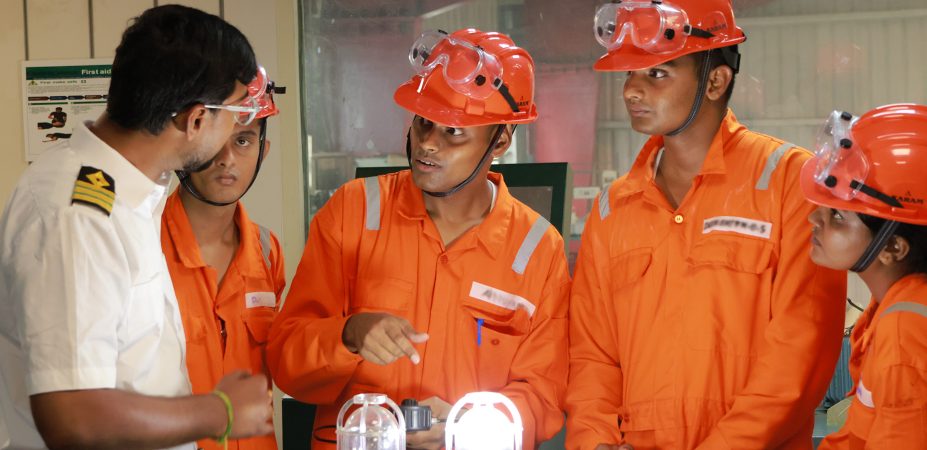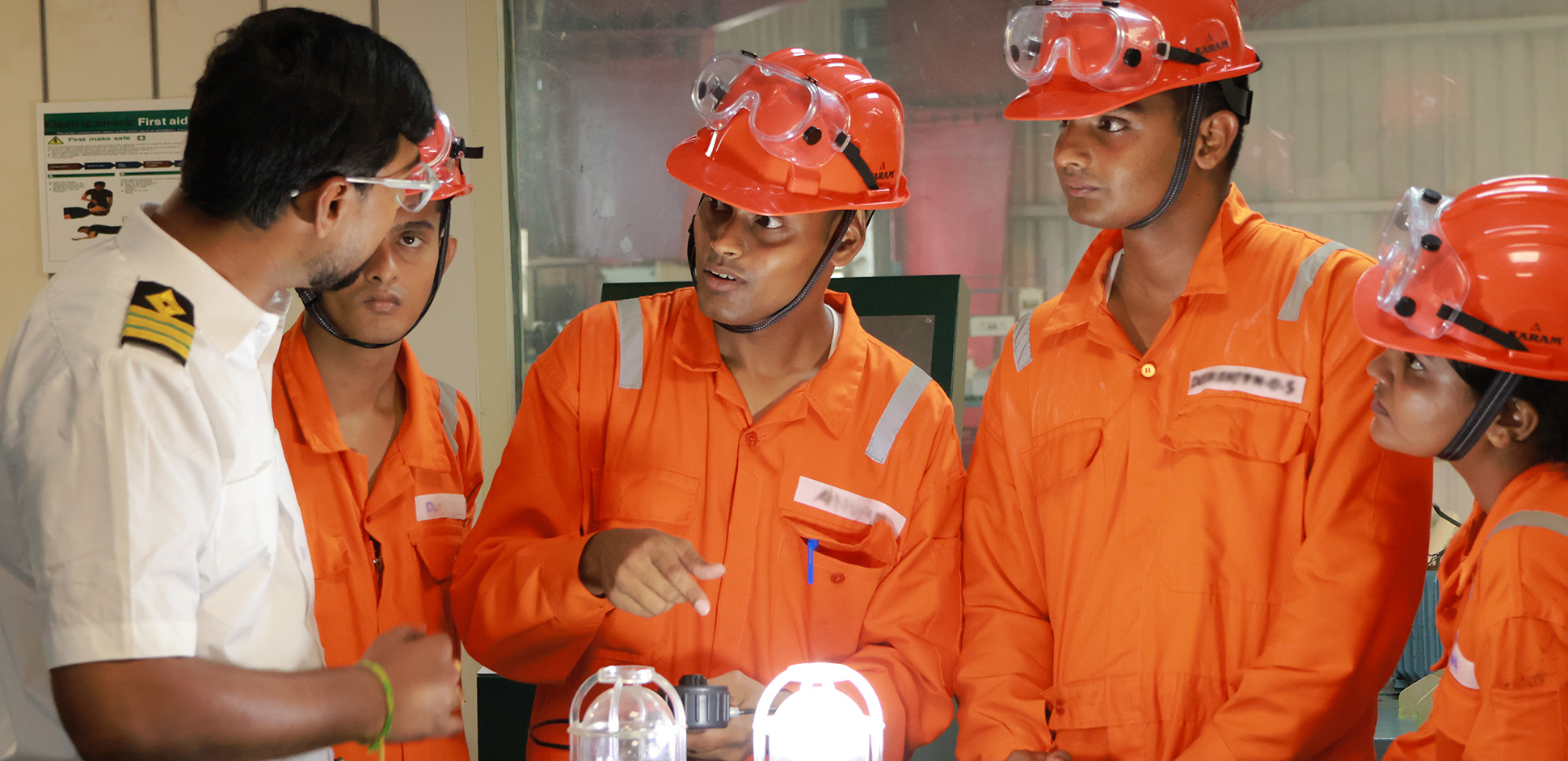
The headlines around decarbonisation continue to focus on engines and orderbooks. The shipping industry is converging into a multi‑fuel era, where LNG, LPG, methanol, ammonia, and eventually hydrogen, are likely to coexist, progressing at different speeds across trades and regions. The technology is ready, the hardware is maturing, and what matters at the current stage is how it is operated.
Alternative fuels and green propulsion introduce operating conditions that are materially different from conventional marine fuels. The hardware was never the hardest part. The hard part is operating these vessels safely, day after day, in the hands of crews who must treat a toxic or cryogenic fuel as routine without ever becoming complacent about it. The operational experience grows step by step, through training, practice and shared lessons, until crews can handle toxic or cryogenic fuels with confidence as part of daily routine, while staying alert to the risks they carry.
Each fuel carries its own discipline. Ammonia is acutely toxic, so a handling or detection failure threatens life, not merely performance, and the safety frameworks around it are still being finalised through the International Maritime Organization (IMO)’s committees. Ammonia also generally occupies significantly more tank volume than conventional liquid fuels for the same onboard energy, reshaping bunkering intervals and tank layouts.
Methanol is low-flashpoint and flammable, manageable at ambient temperature but demanding the right materials and procedures for bunkering. LNG, the relatively mature option, brings cryogenic storage, boil-off management and the persistent reputational problem of methane slip. None of this is beyond the industry’s competence. All of it depends on the development of competence through intentional effort rather than assumption.
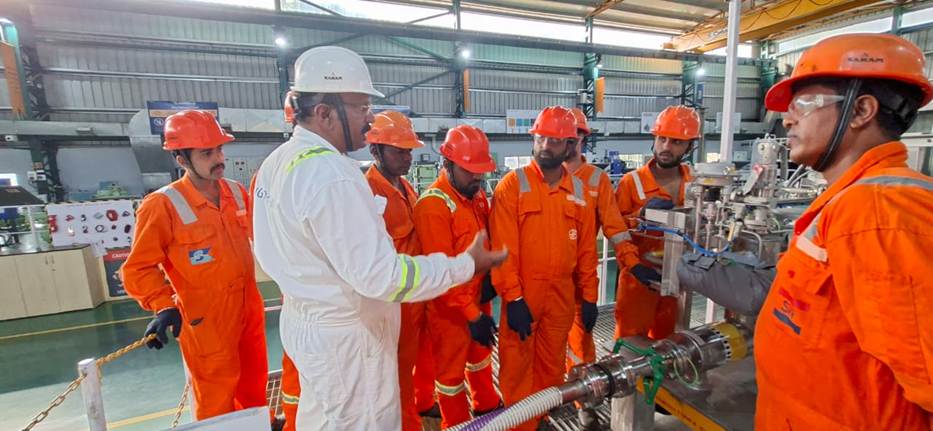
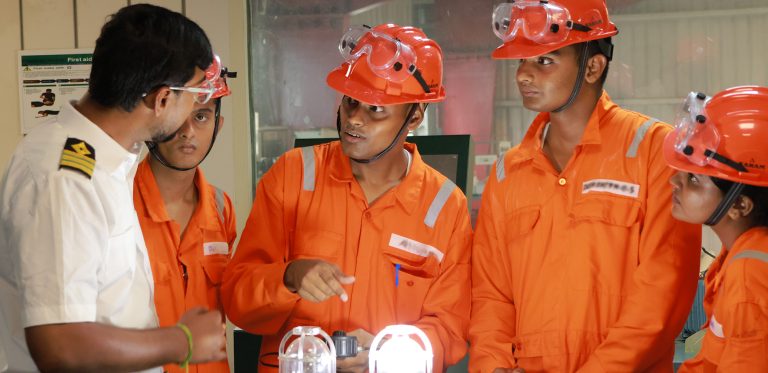
Ammonia bunkering training for ratings at Anglo-Eastern Maritime Academy.
One observation circulating in the sector this year is also the plainest: operational maturity with new fuels comes from repetition and disciplined execution, not from the novelty of the technology. An ammonia-ready ship gives an owner the means to use ammonia; it does not, on its own, make the operation safe right away. Safety comes from training people, rehearsing procedures, qualifying bunkering operations port by port, and accumulating real handling experience until the unfamiliar becomes second nature.
“Readiness comes from repetition and rehearsal, from turning unfamiliar procedures into habit, and from crews consciously unlearning practices that were safe with one fuel but are not safe with another,” says Aalok Sharma, Group Director of Training at Anglo-Eastern. “That is what determines whether a crew is ready for a new-fuel vessel, well beyond the certificates and specifications of the engine itself.”
Closing the competence gap
Engine capability alone does not define new fuel readiness. A key factor is whether crews and shore organisations have the experience to handle these fuels safely under real operating conditions.
Fuel-handling incidents carry immediate safety implications, affecting crew, asset and environment. Regulatory frameworks are evolving accordingly. The International Maritime Organization (IMO) continues to develop guidance under the International Code of Safety for Ships using Gases or other Low-flashpoint Fuels (IGF Code), with increasing emphasis on operational readiness.
While there are more and more dual-fuel and new fuel vessels entering the global fleet, experienced crews that are capable of operating the vessels are in high demand. Training capacity, simulator availability and bunkering practice take time to build. Operational familiarity comes through hands-on training and practice.
“The technology is often ahead of the standards needed to operate it safely,” notes Aalok Sharma. “Competency frameworks for alternative fuels are still catching up, particularly when it comes to defining how crews are expected to behave under pressure, rather than simply what they know in a classroom.”
In parallel, lifecycle emissions must be actively managed to ensure safety, operational efficacy and efficiency. Every alternative fuel promises lower emissions if the world operates in the most ideal equilibrium, but the lifecycle advantages depend heavily on production pathways. This uncertainty adds another layer of complexity to long-term fleet investment decisions.
This creates a gap between asset readiness and operational readiness, and closing that gap requires sustained preparation well before vessel delivery.
Our approach: managing the multi-fuel landscape in practice
This is the area where our position is most distinctive, built over years of deliberate investment rather than recent enthusiasm – and, importantly, across every fuel type the market is moving towards.
We take a fuel-agnostic approach. We are currently engaged with more than 160 dual-fuel vessels and newbuilding projects spanning LPG, LNG, ammonia, methanol, hydrogen, hybrid and electric propulsion, across tankers, gas carriers, bulk carriers, container ships, Ro-Ros and harbour tugs. That is not a pilot programme. It is embedded operational experience across the very fuels the industry is adopting, and it informs the training we develop and the crews we put aboard these vessels.
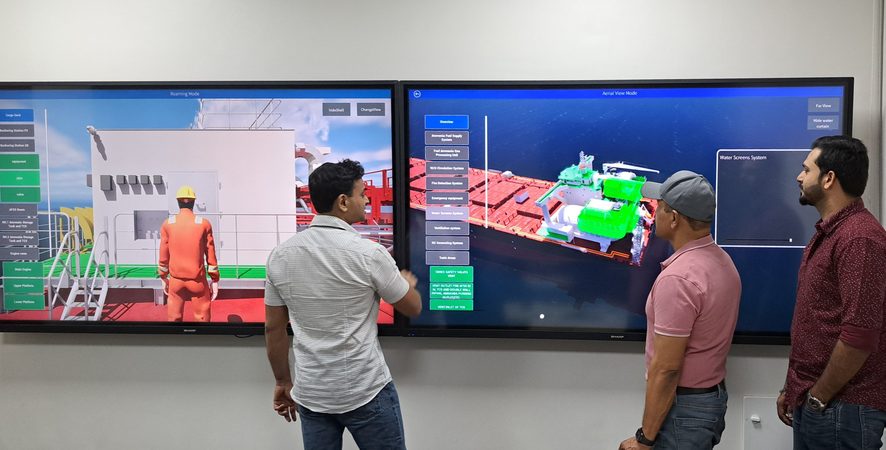
Behind this sits training infrastructures and framework we own and run, and continuously upgrade, through which we’ve advanced seafarer readiness. At our in-house pre-sea maritime academy (AEMA) and fully-owned maritime training centres (AEMTCs), we have dedicated facilities for dual-fuel handling and bunkering from leading manufacturers such as Everllence (formerly MAN Energy Solutions), RT Flex, Wärtsilä, and WinGD. These include an LNG and ammonia bunkering station skid commissioned in 2025, a MAN Energy Solutions ME-GI gas-injection engine training facility, and full-mission simulators aligned with major engine platforms.
“As the ammonia-powered vessels were being built, equivalent efforts were undertaken to develop the capabilities to operate them safely,” says Aalok Sharma. “The bunkering skid, the simulators and the courses all exist for the same reason: by the time a crew takes over a new-fuel vessel, the operational lessons should already have been learned in a controlled environment rather than a live one.”
Ammonia safety training
We have completed our first pilot training courses on ammonia as a marine fuel and run structured methanol courses at basic, advanced and engine-familiarisation levels. More than 3,000 crew members have now passed through our alternative-fuel training programmes. Our LNG bunkering teams have completed operations totalling over 200,000 cubic metres across our managed fleet.
The evidence of what this training means in practice is our management of the Fortescue Green Pioneer — the world’s first ammonia-fuelled vessel to complete propulsion and manoeuvrability trials — which we took into management in May 2024. There is also a continuity advantage worth naming. Our technical arm Anglo-Eastern Technical Services and SeaQuest offer a wide array of technical services to shipowners, including conceptual designs, emission reduction solutions, project planning, newbuilding supervision, dry-docking support, etc. We have delivered more than 1,000 new buildings and conversions to date, and we take many of these vessels from the building berth into management, with the specialist who oversaw construction following the ship into service wherever possible, so deep knowledge of a complex fuel system is not lost in the handover.
We are also represented at the forums where the standards are being written — including IMO HTW (Human Element, Training and Watchkeeping) sessions and the Maritime Energy Training Facility led by the MPA (Maritime and Port Authority) of Singapore — because we believe that shaping the training framework is as important as delivering it.
For an owner taking delivery of a dual-fuel ship, the question is less about the vessel and more about the hands it will be in. The engines are ready. The decisive variable is whether the organisation running them has done it before, safely, at scale. That is the difference between managing a ship and managing the risk that comes with the fuels of the future.
If you are interested in knowing more about our services and offerings, including but not limited to ship management, crew management, newbuilding services, and innovative projects onboard our managed fleet, feel free to contact us.