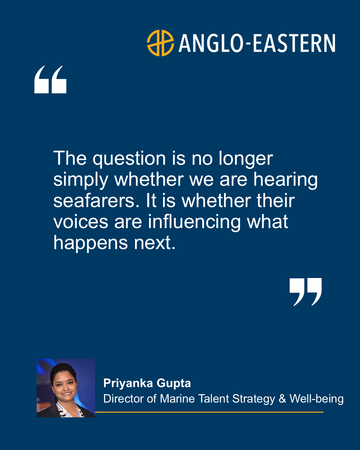
Priyanka Gupta, Director of Marine Talent Strategy & Well-being at Anglo-Eastern, argues that the real test of maritime well-being is not whether seafarers are heard, but whether their experiences lead to visible changes in support, working conditions and everyday life onboard.
Seafarers today have more opportunities to share their experiences through well-being surveys, feedback channels, welfare organisations and industry initiatives. However, listening alone is not creating impact. Progress depends on whether those experiences influence how work is organised, how support is delivered and how decisions are made.
Life at sea presents unique challenges. Extended periods away from family, demanding operational responsibilities, fatigue, cultural differences and limited opportunities for personal space can affect emotional well-being and interpersonal relationships. Addressing these challenges requires more than providing support when someone is already struggling. It requires an approach that encourages early awareness, makes it easier to speak up and ensures that well-being remains part of everyday life onboard.
Moving from listening to meaningful action, the maritime industry must make three fundamental shifts.
1. Turn feedback into visible action
Seafarers need to see that their voices matter and that speaking up can lead to change. Well-being surveys, feedback channels and open conversations must translate into meaningful action, with organisations communicating what has been heard, what is being addressed and what has changed as a result.
When ship staff see that their experiences influence decisions, trust grows and participation becomes more meaningful. Feedback should be treated as an ongoing source of insight into life at sea, rather than an administrative exercise.
2. Address the conditions that shape well-being
Mental health cannot be separated from the environment in which seafarers live and work. Fatigue, demanding workloads, inadequate recovery time, prolonged isolation, interpersonal conflict and difficulties accessing shore leave can contribute to psychological strain.
While individual support remains essential, it cannot replace close examination of the conditions that contribute to distress. Well-being must be considered in operational planning, workload management, fatigue prevention and shipboard leadership. The aim is to address concerns early, before they affect an individual’s well-being, relationships or ability to work safely.
3. Design support with seafarers, not just for them
Effective well-being initiatives must reflect the lived experiences and needs of the people they are intended to support. Ship staff across ranks, nationalities, genders and vessel types should have opportunities to share their perspectives and contribute to the development and evaluation of support systems.This also requires an environment where individuals feel safe to raise concerns, ask for help, acknowledge difficulties and express different points of view without fear of embarrassment or unfair treatment. Support must be accessible, confidential, culturally sensitive and practical within the realities of shipboard life.
How Anglo-Eastern is putting well-being into practice
At Anglo-Eastern, the approach brings together accessible mental health support, early identification, self-awareness, psychological safety, positive workplace relationships and continued engagement with ship staff and their families.
The focus extends beyond responding when someone is in distress. It also includes helping individuals recognise changes in their well-being, encouraging supportive interactions onboard and creating an environment where people feel comfortable seeking assistance.
Accessible mental health support
Through the Anglo-Eastern Reach Programme (ARP), ship staff have access to 24/7 counselling support for personal, emotional and mental health concerns. Available through the WeCare app; the programme provides a direct route to professional assistance whenever support is needed.
ARP posters and suicide prevention guidelines are also made available onboard vessels, helping ship staff find relevant information and understand where to turn when they or someone around them may be struggling.Making support visible, accessible and available at any time helps reduce barriers to seeking assistance and reinforces the importance of reaching out early.
Behavioural Erosion Self-Tracker (BEST): Recognising early signs of strain
The Behavioural Erosion Self-Tracker (BEST) is an app-based self-assessment tool designed to help individuals recognise early signs of behavioural erosion before these develop into more significant concerns affecting emotional resilience, decision-making or interpersonal relationships. Changes in behaviour rarely occur in isolation. Sustained pressure, unresolved concerns and accumulating stress can gradually affect how a person thinks, responds to situations, interacts with others and makes decisions. Recognising these changes early creates an opportunity to pause, reflect and seek appropriate support before they contribute to behavioural or safety-related lapses.
BEST draws on the ABC model of behaviour: Antecedents, Behaviour and Consequences, to encourage reflection on the circumstances surrounding behaviour, the behaviour itself and its possible outcomes. This provides a structured way to consider how situations and responses may be connected, rather than viewing individual incidents in isolation.
After a short self-assessment, individuals receive an indication of which of the tool’s four zones their responses correspond to. This helps them better understand their current patterns and recognise where greater awareness, reflection or support may be beneficial. Personalised suggestions then offer practical steps that can be applied during their time onboard.
The purpose is not to label individuals or predict that a behavioural or safety incident will occur. Rather, BEST encourages self-awareness and makes early intervention possible. By helping individuals recognise potential signs of strain and take appropriate action, the tool supports a more proactive approach to well-being, coaching and safer decision-making.
The underlying principle is straightforward: recognising a concern early creates more opportunities to address it before it escalates.
Mood Index: Making space for a regular check-in
Well-being awareness does not always require a lengthy assessment or a formal conversation. Sometimes, it begins with a simple question: How are you feeling today?
The Mood Index on the WeCare app is designed to provide ship staff with a simple weekly mood check-in. It offers a regular opportunity to pause, reflect on their emotional state and acknowledge how they are feeling.
Amid the demands of everyday shipboard life, individuals may continue with their responsibilities without taking time to recognise their own emotional needs. A brief, consistent check-in can encourage them to become more aware of changes in their mood, recognise patterns over time and consider whether they need to adjust or seek support.
The is not intended to diagnose a mental health condition or replace professional support. Instead, it encourages individuals to pay attention to their emotional well-being rather than dismissing or overlooking it.By making a small moment of reflection part of the weekly routine, the Mood Index helps bring well-being into everyday conversations and awareness.
Together, BEST and the Mood Index support two complementary aspects of proactive well-being: recognising behavioural patterns that may indicate accumulating strain and making space for regular emotional self-reflection. Both encourage individuals to notice concerns earlier and consider an appropriate response.
Psychological safety and doing the right thing
Psychological safety is an essential part of a healthy shipboard environment. Ship staff should feel able to raise concerns, share ideas, ask questions and challenge existing practices constructively without fear of humiliation or unfair consequences.
Through psychological safety training and team briefings, Anglo-Eastern reinforces the principles of Doing the Right Thing and encouraging others to do the same. These efforts emphasise responsible behaviour, open communication, mutual respect and the importance of speaking up when something does not seem right.
Leaders and ship staff each have a role in creating an environment where people feel included, heard and able to contribute. This is particularly important in a multicultural workplace, where differences in communication styles, experience and expectations can influence how individuals interact.Cultural briefings further address cultural awareness, communication, gender balance, food preferences, harassment prevention and respect for individual differences. Greater understanding and shared responsibility can support a more inclusive and respectful working environment.
Recognising positive contributions
Well-being is also shaped by the quality of everyday interactions. Feeling valued, respected and appreciated can strengthen relationships and contribute to a greater sense of belonging.
Through the Appreciate Your Colleague feature on the WeCare app, ship staff can recognise colleagues who demonstrate positive behaviour, offer support or go beyond their usual responsibilities. Encouraging appreciation makes it easier to acknowledge the people who contribute to a positive onboard environment and reinforces the importance of looking out for one another.
Preparing and supporting ship staff throughout their journey
Support begins before an individual joins a vessel. Pre-joining briefings help trainees understand the realities of life at sea, professional expectations and the importance of responsible conduct. Buddy calls provide first-time trainees with an opportunity to discuss their initial experiences, raise concerns and receive support as they adjust to shipboard life.
Anglo-Eastern’s well-being efforts also extend to families, recognising that a seafarer’s well-being is closely connected to life beyond the vessel. Through compassionate engagement during difficult circumstances, including bereavement, as well as the acknowledgement of important family milestones and achievements, the team recognises the importance of maintaining meaningful connections with seafarers’ families. The Well-being team continuously monitors Seafarer feedback ratings results, with particular attention to parameters receiving low ratings. The Trusting Teams initiative was launched to support this effort. Through these connects, the Wellbeing team engages with shipboard leadership and the onboard WE team (the team formed with 2E , 2O and one person who is voted from Ratings team. Wellbeing team ashore partners with WE team onboard for issues) to understand concerns and work together to address them. All survey results are discussed with the relevant management teams and shipboard leadership soon after the surveys are completed for immediate actions.
From initiatives to meaningful impact
Together, these initiatives reflect a broader approach to maritime well-being: making support accessible, encouraging self-awareness, recognising early signs of strain, strengthening psychological safety and maintaining meaningful connections with ship staff.
However, the presence of initiatives alone is not enough. Their value lies in whether people understand them, trust them and feel comfortable using them and whether the concerns they raise lead to appropriate responses.
This requires continued listening, thoughtful evaluation and a willingness to adapt support in response to the experiences of those working at sea. It also requires recognising that individual well-being and organisational responsibility must go hand in hand.
The fundamental question is no longer simply whether we are hearing seafarers, but whether their voices are influencing what happens next.
The next era of maritime well-being must be measured not by how much feedback we collect or how many initiatives we introduce, but by how effectively we listen, respond, address underlying challenges and demonstrate meaningful change.
The ARP poster, suicide prevention guidelines booklet cover, and illustrative visuals of the BEST Well-Being Self-Check and Mood Index are included below for reference.
Learn more about how we cultivate our talent.