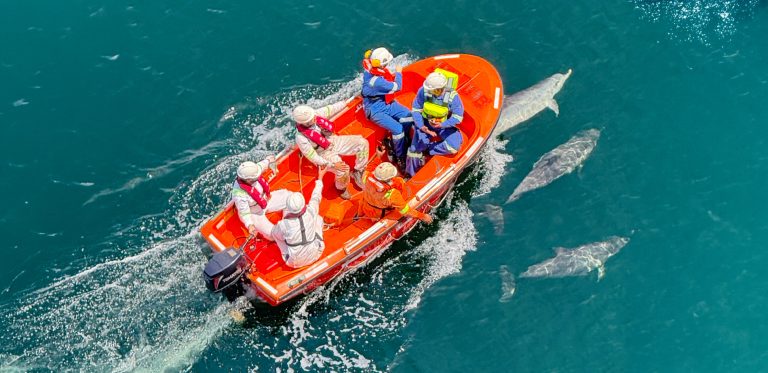
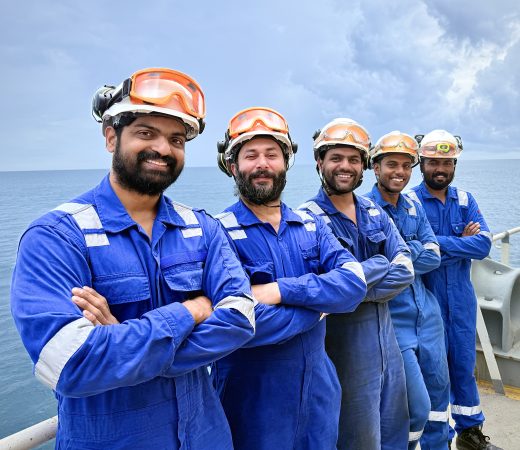
The offshore wind segment continues to stand out as one of the fastest-growing areas within the maritime industry, driven by the global energy transition and an expanding pipeline of projects across Europe and beyond. In this article, Barrie Finlayson, General Manager of Anglo-Eastern’s Glasgow Office, shares how the evolving landscape is reshaping workforce dynamics, covering rising demand and salary pressure, changing expectations on rotation, retention challenges, and the shift towards more strategic, long-term crewing models within the offshore segment.
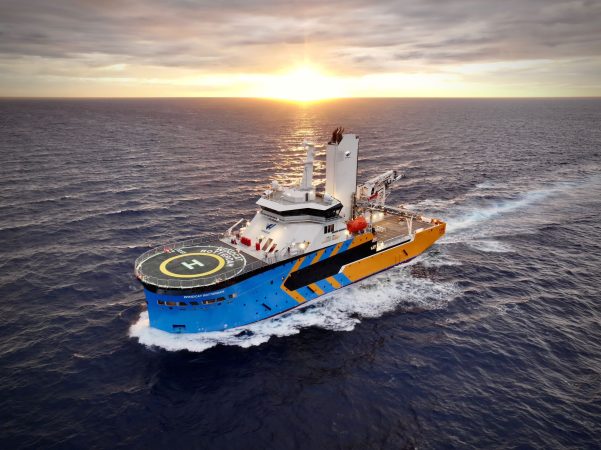
As vessel demand increases – particularly for Commissioning Service Operation Vessels (CSOVs), Service Operation Vessels (SOVs), and cable installation units – the industry is undergoing a structural shift in how it approaches crewing, compensation, and workforce planning. Maritime Strategies International (MSI) projects that demand for CSOVs and SOVs will rise significantly through the latter half of the decade, with demand measured in vessel‑years roughly doubling between 2024 and 2028; at the same time, specialist fleets (SOV/CSOV and cable‑laying vessels) are expanding as newbuild deliveries come online, which alters utilisation and charter dynamics and increases demand for dynamic positioning (DP)-qualified officers, electro‑technical officers (ETOs), cable specialists and multi‑skilled technical crew. In short, MSI’s forecast suggests a growing operational footprint for offshore wind that is shifting crewing from ad‑hoc hiring toward strategic workforce planning and targeted pay premiums for specialist skills.
Against this backdrop, we observe several key developments shaping the offshore wind labour market, particularly in the United Kingdom, with implications for the broader offshore sector.
Rising demand and salary pressure
Sustained growth in offshore wind projects has led to consistent upward pressure on crew salaries and day rates over the past 18–24 months. This trend is closely tied to the increasing demand for specialist vessels and experienced personnel.
The market has evolved from simply sourcing crew to actively competing for qualified offshore wind professionals. Roles on CSOVs, SOVs, cable installation vessels, and associated support vessels are seeing notable increases in compensation, especially for DP-qualified officers, ETOs, and technicians with direct offshore wind experience.
From Anglo-Eastern’s perspective, a key shift is that operators are placing greater emphasis on reliability and competence rather than focusing solely on cost. With tighter project timelines and higher vessel utilisation rates, securing the right crew at the right time has become critical to operational success.
Skills-based differentiation in pay
Salary growth across offshore wind is not uniform. Instead, it is increasingly driven by specific skill sets and project experience.
The strongest increases are seen in:
- DP officers and senior deck officers
- ETOs and electrical specialists
- Crew with SOV and CSOV experience in offshore wind operations
- Cable installation and project-focused personnel
- Multi-skilled technical crew capable of adapting across functions
General crew roles remain relatively stable, although gradual increases are evident due to inflation and broader market competition.
Based on our crewing experience at Anglo-Eastern, we notice a clear premium on versatility and offshore wind-specific knowledge. Crew who are familiar with turbine access systems, dynamic positioning operations, and wind farm project cycles are significantly more competitive in today’s market.
Changing expectations on rotation
Rotation structures have become a defining factor in both recruitment and retention. Balanced rotations (such as 4 weeks on/4 weeks off or 5/5 schedules) are increasingly considered standard, particularly on SOVs and CSOVs. In some cases, shorter or more predictable rotations are decisive for crew when evaluating employment opportunities.
This reflects a broader workforce shift. Offshore wind is attracting a younger, more lifestyle-focused talent pool compared to traditional offshore sectors. Predictability, work-life balance, and schedule transparency are now central considerations.
For operators, this requires building deeper and more stable crew pools while planning manpower requirements further in advance. It is worth highlighting that the rotation structures are now as influential as salary in attracting experienced offshore wind personnel.
Retention as a core challenge
Retention remains one of the most pressing challenges in offshore wind crewing. With rapid sector expansion and strong international demand, experienced crew have increased mobility across projects and regions. This has created a highly competitive environment where movement between employers is frequent.
Key retention pressures include:
- Competitive salary offers from new and upcoming projects
- High demand for experienced offshore wind personnel
- Expectations around rotation and work-life balance
- Access to career development and structured training
- Long-term employment stability and employer reputation
At Anglo-Eastern, we observe that crew are no longer evaluating opportunities based solely on day rates. Instead, they are assessing the overall employment proposition, including career progression, training investment, rotation predictability, and organisational stability.
Companies that invest in structured career pathways and long-term crew management strategies are better positioned to retain talent and maintain operational continuity.
Outlook: Toward a more balanced market
Looking ahead, salary growth in offshore wind is expected to remain steady but more controlled.
The UK offshore wind pipeline continues to expand, supported by new wind farm developments, incoming CSOV deliveries, and long-term maintenance contracts. This will sustain demand for skilled personnel in the coming years.
However, operators are increasingly focused on cost discipline and long-term workforce planning. Based on observation, we anticipate:
- Gradual increases in day rates for specialist offshore wind roles
- Stable salary growth for core crew positions
- Greater emphasis on retention and workforce stability
- Increased utilisation of international talent pools
- More structured, partnership-based crewing models
Overall, the market is transitioning toward a more mature phase where reliability, planning, and sustainability take precedence over short-term cost dynamics.
Strategic approach to crewing
In this evolving environment, Anglo-Eastern advises operators in the offshore wind segment to treat crewing as a strategic priority rather than a transactional cost.
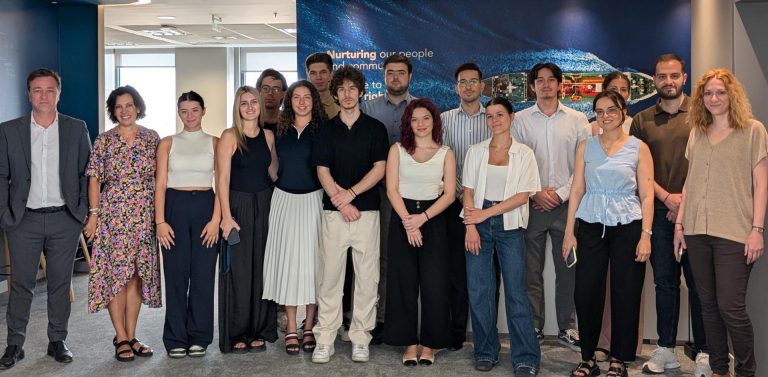
As part of its measures to develop the next generation of maritime professionals, Anglo-Eastern’s Glasgow Office has run a dedicated cadet management programme for more than 30 years. Supporting over 60 UK cadets at various stages of their training, the programme provides structured career pathways, high-quality mentoring, and sea-time opportunities across a diverse fleet. With a strong focus on long-term development and retention, Anglo-Eastern facilitates pathways for its cadets to gain the skills and experience needed to progress into senior roles – while consistently offering new opportunities for aspiring seafarers to begin and grow their careers within the industry.
Reliable and competent crew are fundamental to ensuring safety, efficient turbine access, and uninterrupted project execution. Short-term cost savings on day rates can often introduce operational risks that outweigh initial financial benefits.
A more effective approach includes:
- Building and maintaining stable offshore wind crew pools
- Offering competitive and predictable rotation structures
- Investing in continuous training and competence development
- Partnering with experienced crewing and ship management providers
- Planning workforce requirements well ahead of project timelines
Operators that adopt a long-term, structured approach to crewing are more likely to achieve stronger retention, improved operational performance, and greater certainty in project delivery – key differentiators in an increasingly competitive offshore wind landscape.
Building a sustainable talent pipeline is becoming increasingly important. Investing in cadet programmes and structured training pathways will be key to supporting long-term workforce needs, particularly as demand for offshore wind experience continues to grow.
Anglo-Eastern is a pioneer with extensive experience managing offshore vessels of different types. To explore how we can support your offshore wind projects or career pathway, we welcome you to get in touch with our team: Offshore Ship Management | Anglo-Eastern