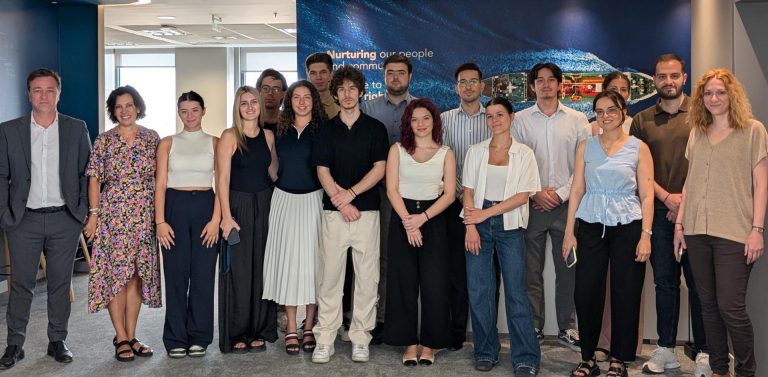
In this article, Prateek Wadhera, Training Superintendent at Anglo-Eastern Maritime Training Centre, Delhi (AEMTC Delhi) shares his experience of representing India at an International Maritime Organization (IMO) workshop on fuel supply chain traceability.
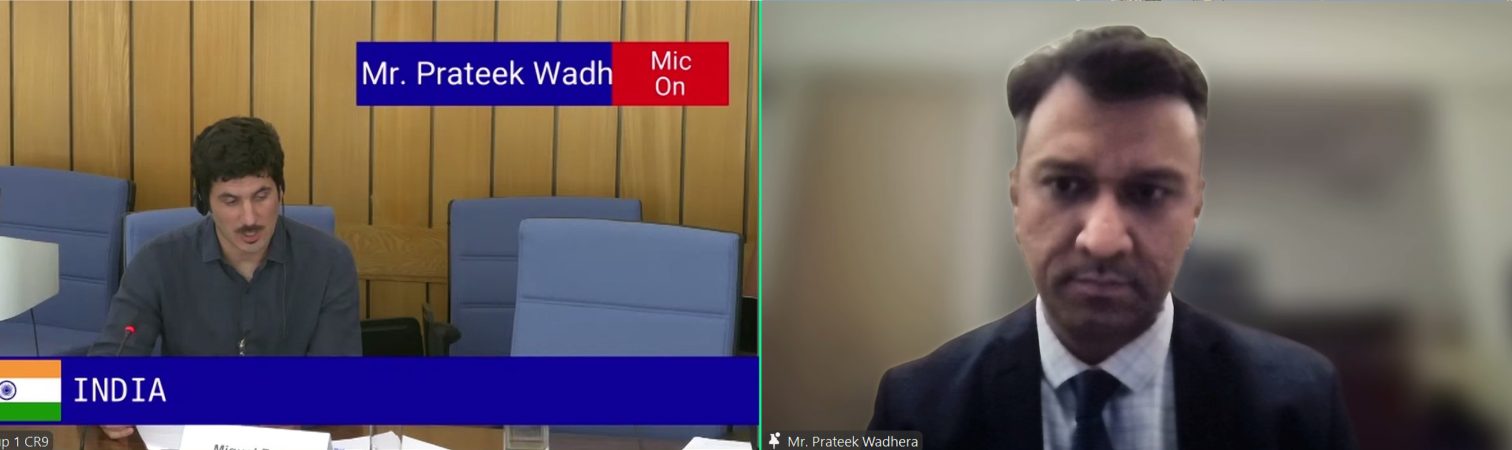
On 15 July, I took part as a delegate from India at IMO’s Greenhouse Gas Expert Workshop 7 (GHG-EW 7) on Chain of Custody Models for Fuel Supply Chain Traceability.
Chain of custody is about traceability: being able to show how an alternative fuel has moved through the supply chain and who holds the claim to its emissions benefit. The models under discussion will ultimately guide the selection of a framework that allows alternative fuels to scale, while remaining transparent enough to prevent the same carbon credit being claimed twice.
How the nomination came about
My name was nominated by the Institute of Marine Engineers in India (IME(I)) to India’s Directorate General of Shipping (DGS), which in turn nominated me to represent India at the workshop. I am grateful to Mr Kaushik Seal, President of IME(I), and Mr Pradeep Sudhakar, Chief Ship Surveyor at DGS, for backing me. Representing India was a responsibility I did not take lightly.
How my time at Anglo-Eastern helped
I spent roughly 18 years at sea, 15 of them exclusively on LNG carriers, before coming ashore in September 2024 to join AEMTC Delhi.
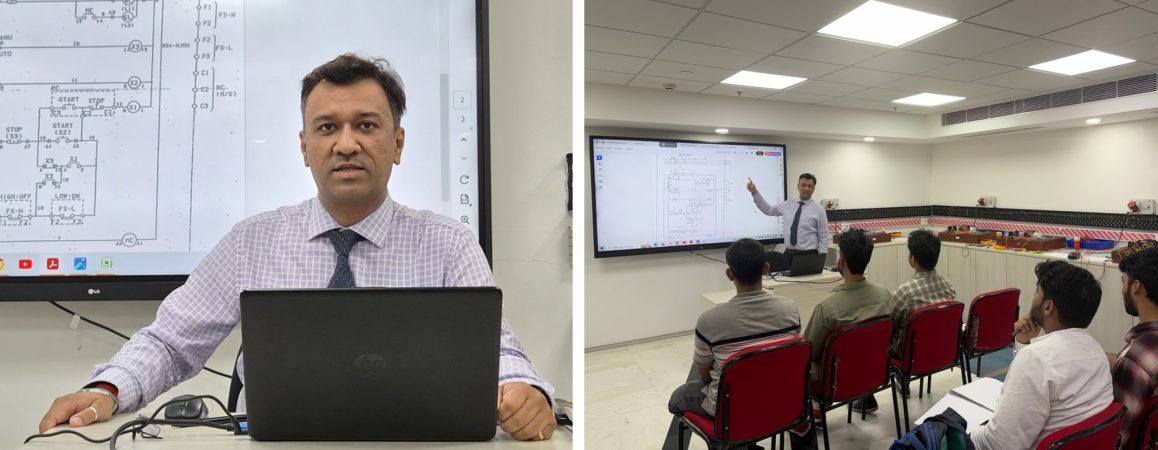
My role at AEMTC Delhi centres on value-added courses for the training and skill enhancement of our in-house candidates, and I serve as Course In-charge for the Dual-Fuel Simulator courses. I am also part of the LNG team at Anglo-Eastern’s Singapore Office and a contributor to the company’s LNG knowledge pool.
What I’ve appreciated most about Anglo-Eastern is its culture. From colleagues to managers, people genuinely support one another and take pride in each other’s success. Capt Aalok Sharma, Group Director of Training, personally encouraged me to participate in key industry forums alongside the notion that when the individual grows, the company grows with them. That belief made a workshop like this feel like a natural extension of my work rather than a departure from it.
Why the GHG-EW 7 workshop matters
GHG-EW 7 follows on from the 84th session of the Marine Environment Protection Committee (MEPC 84), where it was formally agreed to establish the workshop and task it with analysing chain-of-custody models. Its report will be tabled at MEPC 85 in November, placing this discussion at the heart of shipping’s net-zero transition.
To take part in such an event, carrying India’s voice on a question this consequential, was humbling. It was also a reminder of how far a career at sea can take you, and that the work does not stop when you come ashore.
If you are interested in knowing more about our services and offerings, including but not limited to ship management, crew management, newbuilding services, and innovative projects onboard our managed fleet, feel free to contact us.