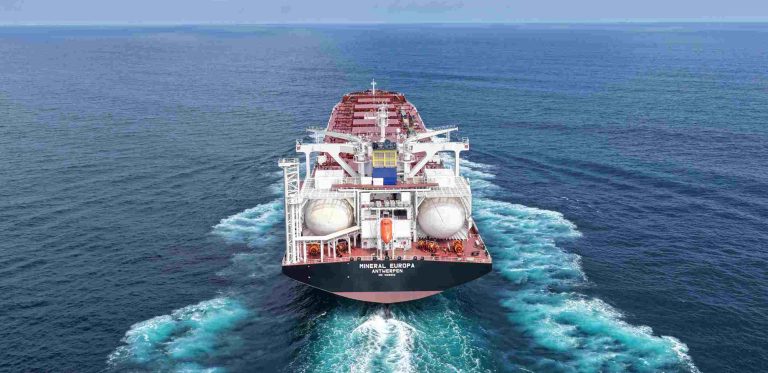
When Mineral Europa, the world’s first ammonia-powered dry bulk carrier, began her maiden voyage this October, the milestone had been eight years in the making. She is also the latest in a long line of milestone ships that Anglo-Eastern’s newbuilding teams have helped bring to life, from icebreaking bulk carriers and semi-submersible vessels to some of the largest bulk carriers ever built and, more recently, LNG and hydrogen-capable vessels.
Across these projects, the vessels, technologies and requirements have changed considerably. Each provides a different chapter in a newbuilding portfolio developed over decades.
Umiak I, Nunavik and Arvik I: Built for the Canadian Arctic
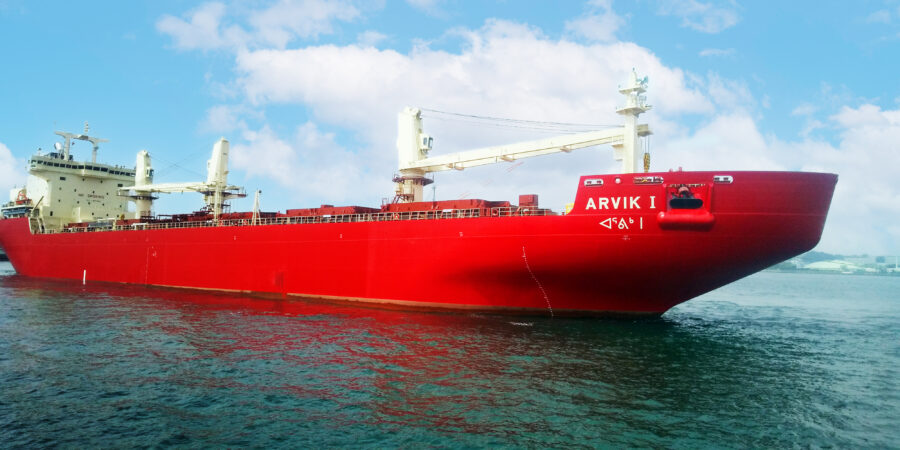
Long before alternative fuels became part of the newbuilding landscape, Anglo-Eastern’s teams were working on another challenge: bulk carriers designed to break ice independently, without icebreaker escort.
Fednav’s Umiak I, delivered by Universal Shipbuilding in Japan in 2006, was the prototype for a series of icebreaking bulk carriers for the Canadian Arctic. Nunavik, delivered in 2014, and Arvik I in 2021 followed her design with practical refinements, both built by Japan Marine United, Universal’s successor. Anglo-Eastern’s newbuilding team was involved with all three ships from concept design through to delivery.
Fednav describes Nunavik and Umiak I as the most powerful icebreaking bulk carriers in the world. In 2014, Nunavik made an unescorted transit of the Northwest Passage carrying Arctic nickel concentrate, the first cargo of its kind on that route. Arvik I later brought IMO Tier III main and auxiliary engines to the series.
Yacht Express: Prototyping semi-submersible carriers
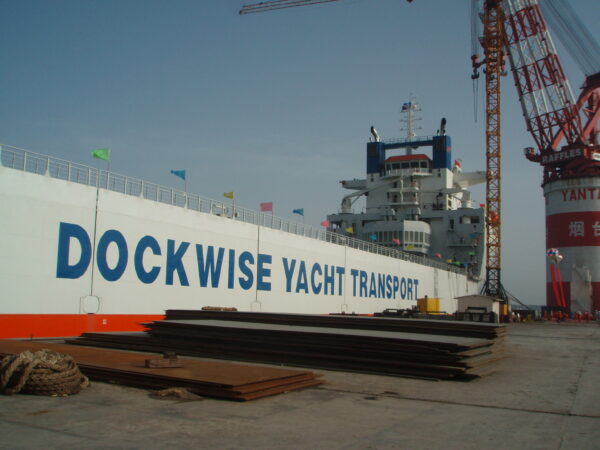
Yacht Express presented a very different type of vessel. Delivered by Yantai Raffles Shipyard in China in 2007 for Dockwise Yacht Transport, the ship was purpose-built to transport yachts by floating them directly on and off a submersible dock bay. Anglo-Eastern’s newbuilding team was involved with the prototype from design to delivery.
At 209 metres long and 32.2 metres wide, Yacht Express has a dock bay measuring 165 metres by 31 metres. To load, the ship ballasts down until the main deck is submerged. Yachts then sail into the dock bay, where divers position supports beneath each hull, before the vessel de-ballasts and lifts them clear of the water. Accommodation for owners and crews travelling with their yachts completes a vessel that is part heavy-lift ship, part liner.
The team’s semi-submersible experience later carried over to Dockwise’s larger ships. Anglo-Eastern was involved in the specification and design development of Dockwise Vanguard, now BOKA Vanguard, the world’s largest semi-submersible heavy transport vessel, and Anglo-Eastern’s teams have remained closely involved in her project-based modifications.
Valemax: Building at a different scale
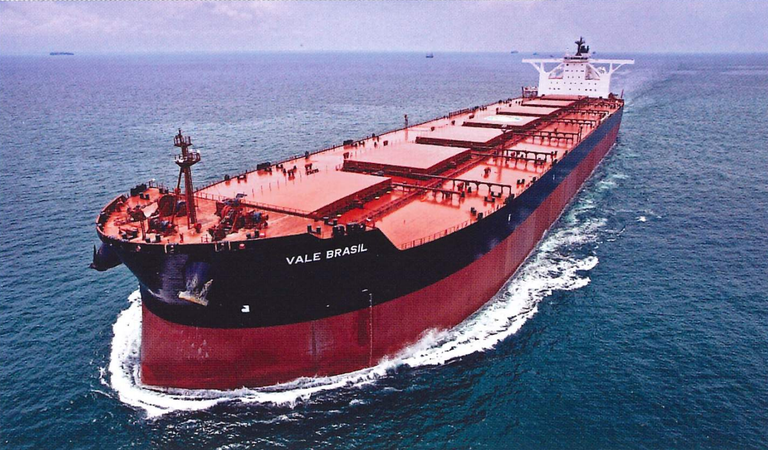
If Yacht Express represented a more unusual vessel concept, the Valemax programme brought a different dimension: scale.
In March 2011, DSME delivered Vale Brasil, the first 400,000 dwt Valemax and, according to Guinness World Records, the largest dry bulk carrier ever built. Anglo-Eastern’s newbuilding teams supervised the construction of three of the seven Valemaxes built at DSME, along with four more 400,000 dwt-class very large ore carriers at Rongsheng Heavy Industries in China for Oman Shipping Company. In total, the teams supervised seven of the largest bulk carriers ever built across two yards in two countries.
At 362 metres long and 65 metres wide, Vale Brasil has a deadweight of approximately 402,000 tonnes and seven cargo holds totalling almost 220,000 cubic metres. A single MAN B&W 7S80ME-C8 engine of 29,260 kW gives the vessel a speed of around 15 knots. Vale estimated approximately 35% lower carbon emissions per tonne of ore compared with a conventional ship of around 200,000 tonnes. The vessel also won the Nor-Shipping Clean Ship Award in 2011.
Legacy: Moving into dual-fuel shipping
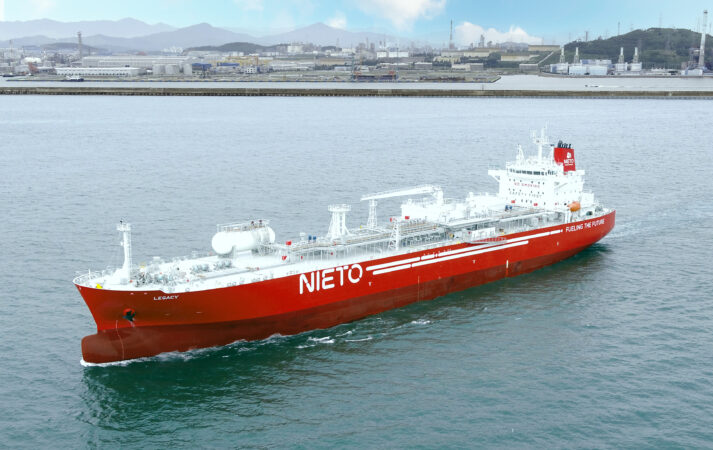
By 2021, the portfolio was extending further into dual-fuel vessel technology.
Delivered by Hyundai Mipo Dockyard that year, Legacy is a 38,000 m³ LPG carrier capable of burning her own cargo as fuel. She was the first mid-size dual-fuel LPG carrier and the first vessel built to Hyundai Mipo’s new LPG-SAFE double-hull design.
Anglo-Eastern’s newbuilding team was involved from design through to delivery for the vessel’s owner, a Mexican LPG group, assessing each stage of the prototype design and keeping the project moving through Covid-19 using virtual meetings and remote inspections. The design meets IMO Tier III NOx limits and EEDI Phase 3 even when operating on conventional fuel.
From ships to floating terminals
Anglo-Eastern’s newbuilding teams are also involved in floating storage and regasification units, or FSRUs, covering both purpose-built vessels and conversions of existing LNG carriers.
The two approaches start from very different positions. With a newbuild, terminal functions can be designed into the vessel from the outset. A conversion is instead a rebuild of an existing trading ship. The team assesses the remaining life of the hull and cargo system before integrating a complete regasification plant and upgrading cargo handling, utility, offloading, electrical and automation systems in a vessel that was never designed to carry them.
Both routes require close control of the interfaces between the hull, topside and owner’s systems, together with a commissioning plan that proves the unit both as a ship and as a terminal.
The Ubuntu fleet: A new era of dual-fuel shipping
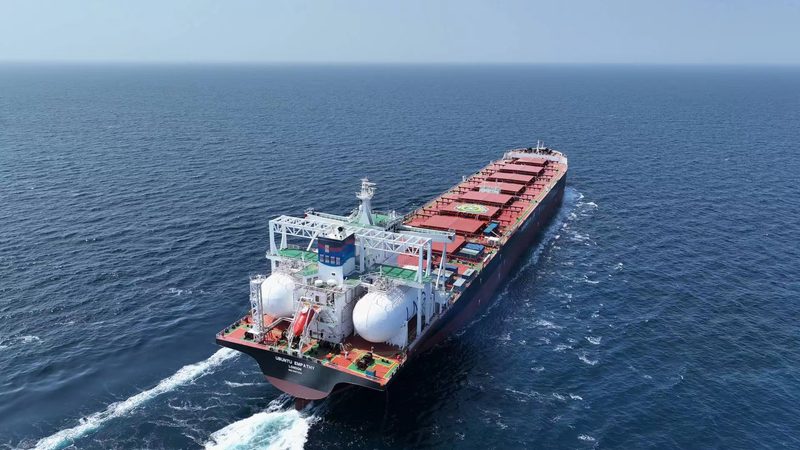
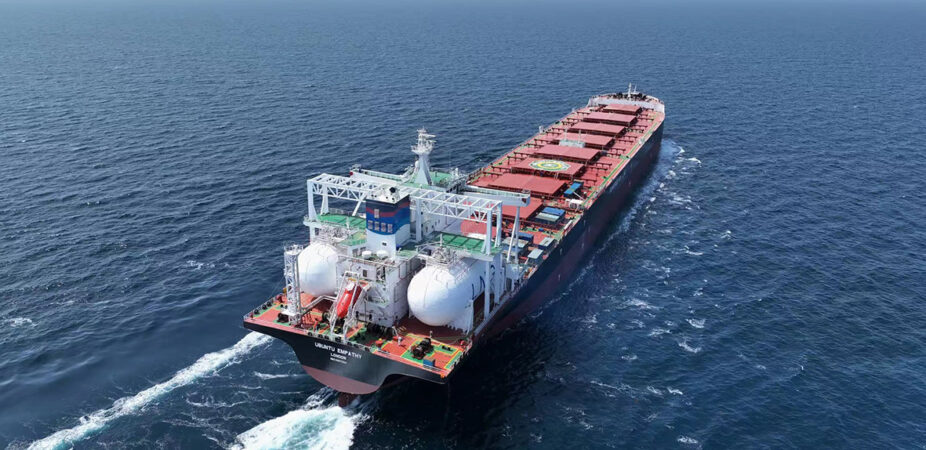
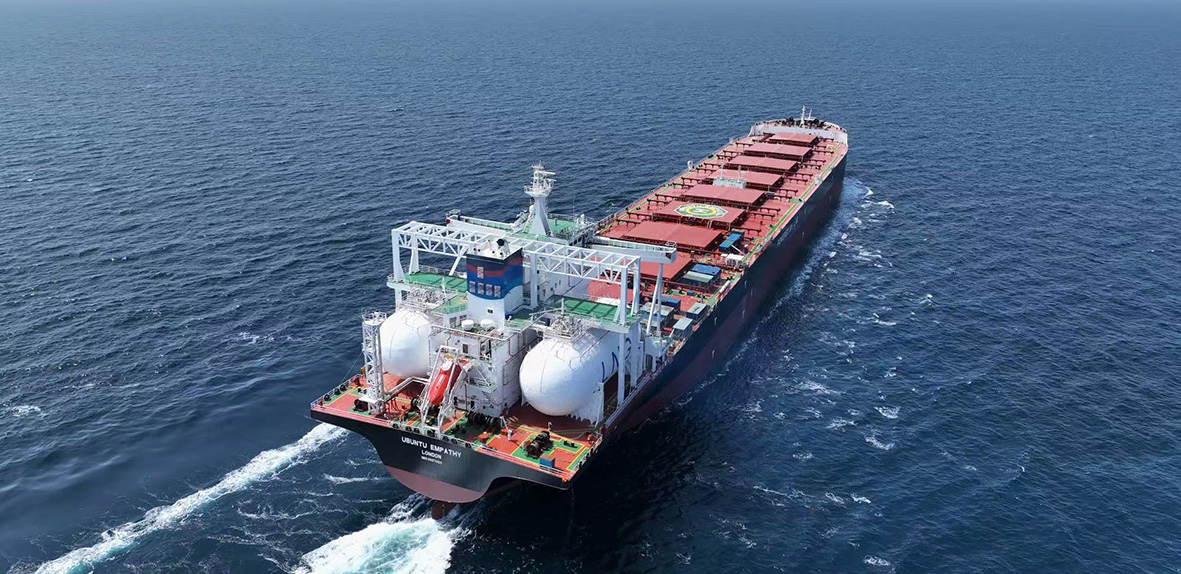
Between December 2022 and February 2024, Shanghai Waigaoqiao Shipbuilding delivered a series of made-to-order LNG dual-fuel Capesize+ bulk carriers for Anglo American’s chartered Ubuntu fleet, which Anglo American describes as the largest of its kind in the world. Anglo-Eastern’s newbuilding team supervised construction of four of the vessels, including Ubuntu Empathy and Ubuntu Humanity.
Each ship is approximately 190,000 dwt and uses an MAN ME-GI high-pressure dual-fuel engine, whose high-pressure gas injection minimises methane slip. Two C-type LNG tanks provide a design range on gas of around 20,000 nautical miles. Anglo American estimates approximately 35% lower CO₂ emissions compared with a conventionally fueled ship through the combination of LNG and design-efficiency measures.
Anglo-Eastern subsequently took over technical management of ships in the series, beginning with Ubuntu Empathy, the company’s first LNG-fueled bulk carrier under management.
Windcat Elevation: Hydrogen-capable CSOVs
The emergence of offshore wind and hydrogen has brought another generation of technologies into the portfolio.
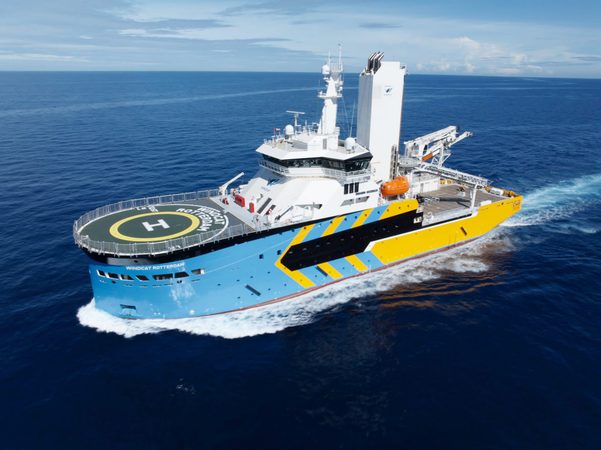
In October 2021, Windcat selected Anglo-Eastern’s newbuilding team to oversee construction of its six Elevation series Commissioning Service Operation Vessels, built by Damen at Ha Long Shipyard in Vietnam. The first, Windcat Rotterdam, was delivered in July 2025 as the first CSOV designed to run on hydrogen.
A CSOV serves as a floating base for an offshore wind farm. It can remain in the field for up to 30 days, accommodating as many as 120 technicians and crew and transferring them to turbines using a motion-compensated gangway while the vessel holds position on dynamic positioning.
The Elevation series was developed by Damen, Windcat and CMB.TECH following four years of evaluation, drawing on Windcat’s experience with Hydrocat 48, the world’s first hydrogen/diesel dual-fuel crew transfer vessel.
A portfolio built over decades
These individual projects form part of a much broader newbuilding portfolio. Anglo-Eastern’s combined newbuilding teams have supervised more than 1,000 newbuildings at over 50 shipyards, covering more than 20 vessel types and sizes, as well as more than 80 conversions and retrofits.
The tanker portfolio alone includes more than 35 VLCCs, 55 Suezmaxes and 45 Aframax/LR2 tankers. Gas experience spans more than 100 LPG carriers, ranging from VLGCs and MGCs to LEGs and ammonia-capable designs, alongside seven LNG carriers, two LNG bunkering vessels, five VLECs and three FSRU projects.
Across the portfolio, Anglo-Eastern’s newbuilding teams have worked at most of the world’s major shipyards and with its leading design houses. Each milestone project has built on the experiences of those before it.
Mineral Europa is the latest, bringing the story back to where it began: the world’s first ammonia-powered dry bulk carrier, and the latest new technology to enter Anglo-Eastern’s newbuilding portfolio.